Author : Jeet Guha Thakurta
Rock – Paper – Scissor! Enough played. Now keep that rock aside, take a paper and a scissor… and get ready for the fun 😀
Hello everyone! Here we will run a contest every month. It will be challenging as well as fun. This month’s contest is called ‘Divide and Rule’. Last date of entry is 28th January.
There are two parts of this contest. The first part may be little easy. The second part is for those who want to really enjoy the challenge.
The task is very simple. You have to cut a piece of paper into 2 or more similar parts. Here, two similar parts will mean two parts which have same shape, but not necessarily same size. They can be bigger and smaller in size, but their shape has to be exactly the same. Okay! So let’s begin…
Part A : Divide the following figure into 2 similar parts.

Part B : Divide the following figure into 4 similar parts.
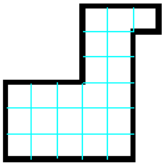
You need to post your answer as a comment here. Upload a photo of your solution to any image hosting place (you can upload it to picasaweb or google drive etc) and mention the link of that photo in the comment here. The earliest & correct answer will be announced as the Winner of this month. There will be a surprise gift for the winner 🙂 So hurry up!
The contest will remain open till 28th Jan midnight. Any answer coming after this timeline will not be considered for the contest. This contest is not open for the Admins.
If you can solve only one part, and you are unable to solve the other – you can still post your answer for one part. However, while deciding about the winner, only those entries with correct solution to both the parts will be considered first. Partial solutions can be taken into consideration if there is no answer submitted with correct solution to both the parts.
You can just draw the solution on a paper and take it’s photo. That is good enough. Multiple entries from one participant are also allowed, however, timestamp of the first correct answer will be only considered for the contest.
wish you all the best,
Jeet Guha Thakurta.
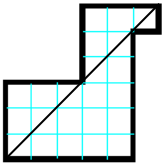
Solution
Divide the figures along the lines shown below.

Winner(s)
Congrats to everyone who participated in this contest. I have put my reply to each answer below. Please feel free to get in touch to me if you want to discuss on your solution further.
We did not get any correct answer to the whole set, particularly the second part of the puzzle. But Part A was correctly answered first by Aishwarya Rao Ponugoti. So we are declaring her as the winner for January 2019.
Aishwarya Rao Ponugoti is selected as the Winner of the Month Jan 2019
Congrats to Aishwarya, and best of luck to everyone for the next contest.
 Scitech Labs
Do participate in the contest even if you think you can’t solve it. We will like to hear your creative solutions and feedbacks.
LikeLiked by 2 people
My answer for Part A:-
https://drive.google.com/file/d/1sR-4Ssar3tRLPOMpfaukfC4VgFkLtKzu/view?usp=drivesdk
LikeLike
Congrats! This answer is absolutely correct.
LikeLike
My answer for Part B is:-
https://drive.google.com/file/d/1U2CBtYrO88DAQRblv75urrqlUXRpGhRn/view?usp=drivesdk
LikeLike
Nice try! But this is not correct. The bottom-right part is not similar to the other three. Two figures are called similar when they have exact same shape, only smaller or bigger in size. If one side is 1.5 times bigger, all other sides should also be exactly 1.5 times bigger. That property is not maintained in this solution.
LikeLike
Part A Solution
LikeLike
Nice try! But this answer is not correct. Two figures are called similar when they have exact same shape, only smaller or bigger in size. If one side is 1.5 times bigger, all other sides should also be exactly 1.5 times bigger. That property is not maintained in this solution.
LikeLike
Part B solution
LikeLike
Nice try! But this answer is not correct. The figure with 1-1-1-1 mark is not similar to the other three. Two figures are called similar when they have exact same shape, only smaller or bigger in size. If one side is 1.5 times bigger, all other sides should also be exactly 1.5 times bigger. That property is not maintained in this solution.
LikeLike
I’m answering from how I understood the question.
LikeLike
Nice try! But this answer is not correct. Two figures are called similar when they have exact same shape, only smaller or bigger in size. If one side is 1.5 times bigger, all other sides should also be exactly 1.5 times bigger. That property is not maintained in this solution. Although each part has 6 sides, but look at the ratio of their sides. They are not same on all sides. If you take two similar figures, you can just zoom-in or zoom-out on one figure to get the other figure. For example in your solution of Part B, the shapes marked as Shape1 and Shape2 do not match each other – one is longer and rectangular, another is more square in shape. They are different shapes altogether.
LikeLike
[24/01, 19:38] Kuldeep Singh: https://www.instagram.com/p/BtBSPLxhJAV/?utm_source=ig_share_sheet&igshid=ci1sfs7ljyf8
[24/01, 20:24] Kuldeep Singh: https://www.instagram.com/p/BtBXTZlB4Cq/?utm_source=ig_share_sheet&igshid=eihhlqg0efmw
LikeLike
Nice try! But this answer is not correct. Two figures are called similar when they have exact same shape, only smaller or bigger in size. If one side is 1.5 times bigger, all other sides should also be exactly 1.5 times bigger. That property is not maintained in this solution. They are not same on all sides. If you take two similar figures, you can just zoom-in or zoom-out on one figure to get the other figure. For example in your solution of Part B, the bottom left part is different in shape from the other three parts. It has two sides in 3:3 ratio while the other three parts have the same sides in 3:2 ratio. Hence it is not similar to the other parts.
LikeLike
Congrats to all the participants. And congrats @Aishponugoti
LikeLike